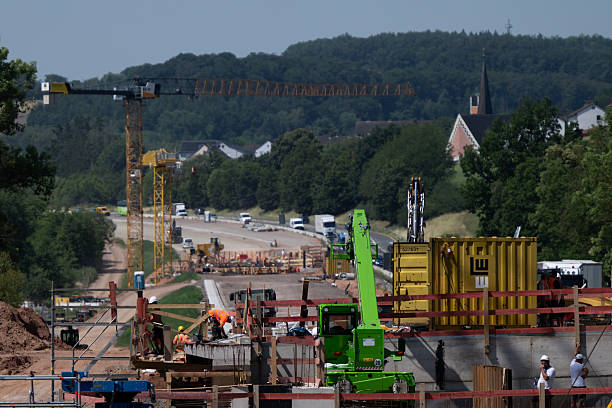
Construction Jobs in Germany with Visa Sponsorship: Earn €55,000+ (2026 Opportunity Card Guide)
Germany has a construction problem it cannot solve with its own workforce. As of early 2026, roughly 30% of construction firms across the country report vacancies they simply cannot fill. Electricians, carpenters, masons, and heavy equipment operators are at the center of that gap, and it is getting worse, not better. For skilled tradespeople outside the European Union, that shortage has turned into one of the more realistic pathways into a stable, well-paid European career — without needing a job offer in hand before you apply.
This guide walks through exactly how that pathway works in 2026: what the Opportunity Card (Chancenkarte) is, who qualifies, what construction roles are actually in demand, what you can realistically expect to earn, and how to move from “job search visa” to a full work permit once you land a position.
Why Germany Is Actively Recruiting Foreign Construction Workers
Germany’s construction sector (Baugewerbe) employs around 2.5 million people, and the industry is still short more than 100,000 skilled workers. Nearly half of construction firms now name the labor shortage as their single biggest business risk. The average vacancy for a qualified trade position now sits open for more than 160 days, up from under 100 days just a few years ago.
The causes are structural, not temporary. Germany’s workforce is aging faster than it is being replenished, and the government’s target of 400,000 new housing units per year has been missed every year since it was introduced. Roads, bridges, rail lines, and renewable energy infrastructure are all competing for the same shrinking pool of tradespeople. That combination — an aging domestic workforce, an ambitious infrastructure agenda, and a housing crisis — is exactly why the federal government has spent the last two years making it dramatically easier for foreign construction workers to move to Germany, work legally, and eventually settle permanently.
Certain specialties are under even more pressure than the industry average. Road and asphalt workers saw demand jump nearly 40% year over year. Electricians remain one of the hardest positions to fill anywhere in the country, with entire postings going unanswered for months. If your trade sits inside one of these bottleneck categories, you are not competing for a visa — Germany is actively trying to recruit you.
What Is the Opportunity Card (Chancenkarte)?
The Opportunity Card is a residence permit introduced under Section 20a of the German Residence Act, in effect since June 2024. Unlike a traditional work visa, it does not require a signed employment contract before you apply. Instead, it lets qualified tradespeople and professionals from outside the EU enter Germany for up to 12 months specifically to search for work, attend interviews, sit for qualification recognition exams, and try out employers directly.
While holding the card, you’re allowed to:
- Work part-time, up to 20 hours per week, in any sector
- Take unlimited two-week trial placements (Probearbeit) with different employers
- Attend interviews and licensing exams in person rather than remotely
- Convert directly into a full work permit or EU Blue Card the moment you receive a qualifying offer, without leaving Germany
If you don’t secure a permanent offer within the 12 months but you do have a pending offer that isn’t quite ready to convert, a follow-up card (Anschluss-Chancenkarte) covering up to two additional years can be issued. The card itself does not grant permanent residency, but converting into a standard work permit puts you on the same track toward permanent residence and eventual citizenship as any other skilled immigrant.
Two Ways to Qualify
There are two separate routes into the Opportunity Card, and you only need to satisfy one of them.
Route 1: Recognized Qualification (No Points Needed)
If you hold a foreign vocational qualification of at least two years that is fully recognized in Germany — checked through the Anabin database or the formal Anerkennungsgesetz recognition process — you qualify automatically. This is the standard route for electricians, plumbers, carpenters, HVAC technicians, and similar trades where Germany has an established framework for evaluating foreign credentials. A university degree fully recognized in Germany, such as in civil engineering, also qualifies you directly.
Route 2: The Points System
If your qualification isn’t yet fully recognized, you can still qualify by scoring at least six points across the following categories:
- Partial recognition of your foreign qualification — 4 points
- Five years of relevant work experience within the last seven years — 3 points
- Two years of work experience, or being under 35 years old — 2 points
- Age 35–40 — 1 point
- Language proficiency: German A2, or English C1 — 1 point
- Previous stay in Germany of at least six months — 1 point
- Working in a recognized shortage occupation (construction and skilled trades qualify) — 1 point
- Applying together with a spouse — 1 point
Basic requirements apply to both routes regardless: you need at least German A1 or English B2 language ability, and proof that you can financially support yourself.
Financial Proof: What You Need to Show
Every applicant, regardless of qualification route, must demonstrate financial self-sufficiency for the length of the card. As of 2026, that figure is €1,091 per month, or €13,092 for the full year. There are three accepted ways to prove it:
- A blocked account (Sperrkonto) through a provider such as Fintiba, Expatrio, or Coracle — the most common and widely accepted method
- A formal Declaration of Commitment from a sponsor already resident in Germany
- A part-time job contract in Germany paying at least €1,091 per month net, arranged before you arrive
Applicants working with an immigration consultant or relocation service often set up the blocked account and pre-arrange a part-time trade job simultaneously, which covers the financial requirement and gets a foot in the door with a German employer at the same time.
What Construction Jobs in Germany Actually Pay in 2026
This is the number every applicant wants a straight answer on, so here it is without the sales pitch.
Entry-level and average pay. The broad average across all construction roles in Germany, including unskilled and semi-skilled positions, sits around €46,500 per year, or roughly €22 per hour. Half of all construction workers earn less than €40,000 annually. That’s the honest baseline — most entry-level and general labor roles will not hit €55,000.
Skilled, tariff-bound trade wages. Where the numbers change is inside collectively bargained trades. Since April 2026, the tariff wage for a qualified journeyman in the main construction trade (wage group 3) is €23.97 per hour — about 72% above the statutory minimum wage. Roofing carries its own sectoral minimum of €16.60 per hour. Full-time employees with recognized vocational training earn an average of about €4,125 per month (€49,500/year) across German industry generally, and collectively bound construction and electrical trades businesses frequently pay above that average.
Master tradespeople and specialists. Master craftsmen (Meister), site supervisors, and specialists in high-demand shortage categories — electricians, mechatronics technicians, welders with certified credentials, and heavy equipment operators — routinely earn between €28 and €38 gross per hour once qualified and experienced. At full-time hours, that lands squarely in the €55,000–€75,000+ range, especially with overtime, which is common on infrastructure and housing projects racing against deadlines.
Engineering and project management roles. Civil engineers, construction project managers, and site engineers with a recognized degree qualify directly for the EU Blue Card. The 2026 threshold for shortage occupations — which construction management falls under — is €45,934 per year; the standard threshold is €50,700. In practice, experienced project managers and site engineers in major cities like Munich, Stuttgart, and Frankfurt are frequently offered €60,000–€80,000, reflecting both the shortage premium and the cost of living in those regions.
The honest takeaway: €55,000+ is a realistic and achievable figure in 2026 — but it’s the ceiling for skilled trades and the floor for engineers and project managers, not a guaranteed entry-level number. Master-level tradespeople, certified welders, licensed electricians, and site supervisors are the profiles most consistently clearing that mark, particularly in southern Germany where shortages are most severe.
Which Construction Roles Are in Highest Demand
Not every trade carries the same weight with German employers or immigration authorities. These categories currently sit at the top of the shortage list:
- Electricians — the single hardest role to fill nationwide, with entire regions reporting near-total vacancy
- Carpenters and joiners
- Masons and concrete specialists
- Plumbers and heating/sanitation technicians (Anlagenmechaniker SHK)
- HVAC technicians
- Welders, particularly with certified structural welding credentials
- Road and asphalt construction workers — demand up nearly 40% year over year
- Heavy equipment and crane operators
- Civil engineers and construction project managers
Because construction sits on Germany’s official shortage occupation list, applicants in these trades gain a real advantage: a lower EU Blue Card salary threshold, a bonus point on the Chancenkarte scoring system, and in many cases a waived priority check — meaning the employer doesn’t have to first prove no German or EU candidate was available for the role.
Where the Jobs Are: Regional Hotspots
Demand is not evenly spread across the country. Southern Germany, particularly Bavaria and Baden-Württemberg, carries the most severe construction bottlenecks in the country, with some districts reporting unfilled vacancy rates above 70%. Baden-Württemberg alone was short an estimated 47,000 skilled workers in 2025. Berlin, North Rhine-Westphalia, and other major urban centers also offer strong demand, particularly for housing construction and infrastructure renewal projects. Eastern German regions still have real opportunities, though tradespeople there currently earn around 17% less on average than counterparts in the west — a gap trade unions are actively working to close.
Step-by-Step: How to Apply for the Opportunity Card
- Check your eligibility. Use the official Chancenkarte Self-Check tool on the Make it in Germany portal to confirm your points total or your recognized-qualification status before spending money on anything else.
- Get your qualification checked through Anabin. If your vocational certificate or degree isn’t already listed as fully recognized, start the Anerkennungsgesetz recognition process early — this step alone can take several months and is the single biggest source of delay for applicants.
- Gather your documents. You’ll typically need a valid passport, proof of vocational qualification or degree, language certificates, work experience letters, and financial proof.
- Set up your financial proof. Open a blocked account with a provider like Fintiba or Expatrio, secure a Declaration of Commitment, or line up a part-time job contract paying at least €1,091/month.
- Submit your application. Apply through the Consular Services Portal or directly at your nearest German embassy or consulate, then book your VFS Global appointment for biometrics and document verification.
- Pay the application fee — €75, payable in local currency at your appointment.
- Wait for processing. Most missions process complete applications in 4 to 12 weeks; incomplete files are the single most common cause of delay, so double-check every document before submission.
- Register on arrival. Once approved, you have two weeks to register your address (Anmeldung) at the local Bürgeramt.
Converting the Opportunity Card Into a Full Work Permit
The Chancenkarte is a bridge, not a destination. Once you have a qualifying job offer, you take that offer to the local Ausländerbehörde (Foreigners’ Registration Office) and convert into one of the following:
- Standard Skilled Worker Residence Permit — for trade and vocational roles matching your recognized qualification, no fixed salary minimum required
- EU Blue Card — for degree-holding roles like civil engineering or project management meeting the €45,934 (shortage occupation) or €50,700 (standard) salary threshold, and offering the fastest track to permanent residence
- Follow-up Opportunity Card — if you have an offer that can’t yet convert, buying you up to two more years to finalize things
Conversion fees run between €56 and €100 depending on the federal state, and the process is generally faster and smoother than a first-time visa application since you’re already in the country and already known to the local authorities.
Alternative and Faster Routes Worth Knowing About
The Opportunity Card isn’t the only door into German construction work, and depending on your situation, it may not even be the fastest one.
- Direct Skilled Worker Visa (§18a AufenthG): If you already have a job offer and a recognized qualification, you can skip the Chancenkarte entirely and apply straight for a work permit. No points system, no waiting period searching for work — just a direct application once an employer has committed to you.
- Western Balkans Regulation: Citizens of six Western Balkan countries can work in almost any occupation in Germany with a job offer alone, without formal qualification recognition, under an annual quota of 25,000 visas. This route is especially popular for construction roles specifically because it removes the recognition bottleneck.
- Intra-Company Transfer: If you already work for a multinational construction or engineering firm with German operations, an internal transfer permit can be faster than any public visa route.
Given the choice, an applicant with a confirmed job offer and a recognized qualification is generally better served applying directly for the work permit rather than going through the full Opportunity Card process — the card exists specifically for those who want to search for work from inside Germany, not those who already have an offer lined up.
Common Mistakes That Delay or Sink Applications
- Assuming a qualification is recognized without checking Anabin first. Without a confirmed “Entspricht” or “Gleichwertig” rating, an application built on that assumption will stall.
- Underestimating processing time for qualification recognition. This step alone can take longer than the entire visa process and should start months before you plan to apply.
- Submitting incomplete financial documentation. Missing or inconsistent proof of funds is consistently cited as the leading cause of processing delays.
- Ignoring language requirements because “English is enough.” English B2 technically satisfies the baseline, but in practice, most on-site construction roles run almost entirely in German. Applicants who arrive with at least conversational German consistently report faster hiring and smoother workplace integration.
- Treating the 20-hour part-time cap loosely. Any work beyond that limit while holding the Chancenkarte is not authorized and can jeopardize your status.
Frequently Asked Questions
Can I bring my family with me on the Opportunity Card? Not automatically. Your spouse can apply for their own Opportunity Card alongside you (which also earns you a bonus point), but children require a separate Family Reunion Visa once you’re settled.
Is there an age limit? No formal age cap exists, though the points system favors younger applicants — two points for those under 35, one point for ages 35–40.
Do I need German language skills to get hired in construction? Not for eligibility, but practically, yes. Most site-level roles operate in German, and German ability significantly widens your job options and speeds up hiring.
How long does the whole process take, start to finish? Realistically, budget 3 to 6 months from qualification recognition through visa approval, plus however long it takes to secure a job offer and convert to a full work permit once you’re in Germany.
Does the Opportunity Card lead to permanent residency? Not directly, but it’s the fastest on-ramp to a work permit that does. Once converted, especially via the EU Blue Card, you’re on one of the shortest permanent residency timelines available in the EU.
Final Thoughts
Germany’s construction labor shortage is not a short-term dip — it’s a structural, decade-long gap driven by an aging workforce and a housing and infrastructure agenda the country cannot staff on its own. For skilled tradespeople willing to navigate the qualification recognition process and meet the financial requirements, the Opportunity Card offers something genuinely rare in European immigration: a legal way to move first and find work second, backed by an economy that badly needs exactly your skill set. The €55,000+ figure isn’t marketing — it’s the real ceiling for master-level trades and the real floor for engineers and site managers, achievable specifically because the demand behind it is structural rather than seasonal. Start with your qualification recognition, get your financial documentation in order early, and the rest of the process moves faster than most applicants expect.